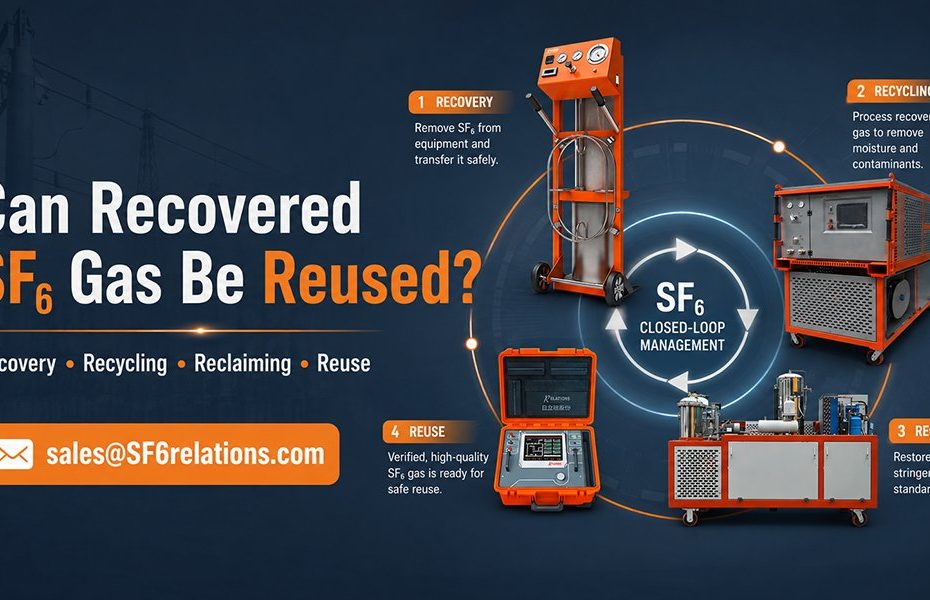
Across the T&D Industry, maintenance of GIS, circuit breakers, and other SF6-insulated equipment often requires technicians to recover SF6 from sealed gas compartments before inspection, repair, or component replacement. However, contaminated SF6 is not necessarily waste gas. When properly recovered, recycled, treated, and reconditioned, it may remain suitable for further service rather than being discarded or replaced with virgin SF6.
As a result, SF6 reuse plays an important role in modern gas management. An effective SF6 reuse integrates SF6 gas recovery, quality analysis, recycling or purification, and final quality verification. In practice, the core question is not simply whether the gas has been recovered and stored, but whether its quality meets the requirements of the intended application. Read this article to learn more.
Can Recovered SF6 Be Reused?
Yes, but recovering is only the first step. Recovery does not automatically mean reuse. After skilled personnel remove SF6 from GIS, GIL, or other gas-insulated equipment, they must confirm whether the recovered gas remains suitable for further service. Gas quality may change during operation, maintenance, and transfer. Moisture may enter through pipelines, while electrical activity can generate decomposition by-products. Air, particles, or other contaminants also affect the recovered gas quality. For this reason, technicians should evaluate the recovered sf6 gas before reuse. IEC 60480:2019 provides guidance for evaluating SF6 and mixtures after recovery and recycling. In practice, these criteria help maintenance teams determine the next handling.
An SF6 gas analyzer provides the measurement data required for this decision. It can assess key parameters such as purity, moisture, and decomposition products. Technicians can then compare the results with the specified criteria. If treated gas meets the required quality level, it may proceed to reuse; otherwise, it may require purification, recycling, or reconditioned.
What Is the Difference Between SF₆ Recovery, Recycling, Reclaiming and Reuse?
If the recovered gas does not yet meet the criteria, further treatment may be necessary. At this point, it is important to distinguish between SF6 recovery, recycling, reclaiming, and reuse.
Recovery means removing SF6 from electrical equipment and transferring it into storage tank.
Recycling involves processing recovered gas so that manageable contaminants, such as moisture and particles, can be reduced.
Reclaiming involves more extensive treatment intended to restore recovered gas to a defined quality level.
Reuse occurs when qualified gas returns to an appropriate application after its condition has been verified.
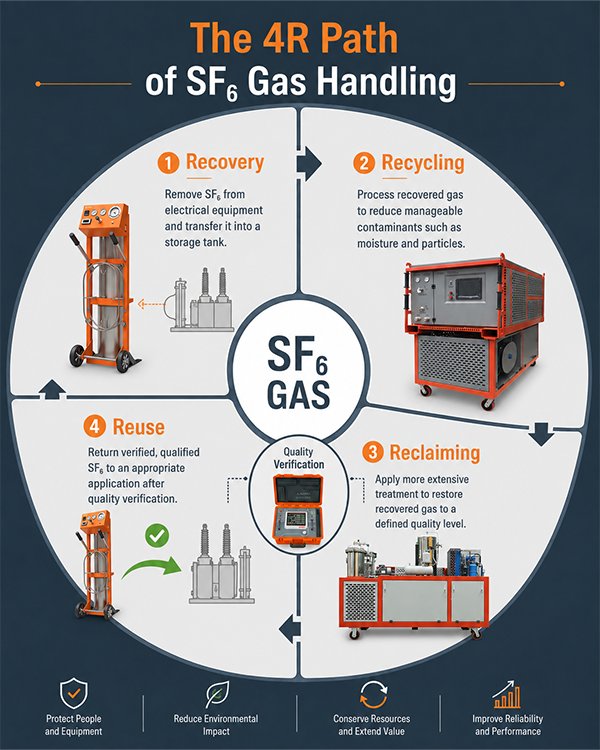
4R path of sf6 gas handling
In the European Union, Regulation (EU) 2024/573 states that from January 1, 2035, SF₆ used for maintenance or servicing of electrical switchgear must generally be reclaimed or recycled, subject to specified exceptions.
What Equipment Supports SF₆ Reuse?
Each stage of the reuse process requires a different function. An SF6 gas analyzer evaluates gas quality and supports the reuse decision. An SF6 recovery unit transfers gas from GIS, GIL, or other equipment into inventory containers. When the recovered gas requires treatment, SF6 recycling or purification equipment can reduce moisture and other manageable contaminants. Vacuum and refilling equipment then prepares the gas compartment and returns qualified SF6 to service.
Equipment selection should therefore consider the gas volume, required recovery pressure, treatment needs, storage arrangement pipeline size, and site conditions.
If your facility holds recovered or contaminated SF6, a comprehensive SF6 gas management can offer a more practical and environmentally responsible alternative than treating it as waste. Through proper recovery, analysis, recycling or reclaiming, and final quality verification, contaminated gas can return to the supply cycle instead of being unnecessarily discarded. As a result, operators can reduce emissions, control replacement costs, improve gas traceability, and make better use of existing SF6 resources. In addition, a well-treated process supports clearer inventory records and more reliable end-of-year reporting. If you would like to discuss a suitable SF6 recovery, treatment, or reuse solution for your site, free feel to contact [email protected].
Across the T&D Industry, maintenance of GIS, circuit breakers, and other SF6-insulated equipment often requires technicians to recover SF6 from sealed gas compartments before inspection, repair, or component replacement. However, contaminated SF6 is not necessarily waste gas. When properly recovered, recycled, treated, and reconditioned, it may remain suitable for further service rather than being discarded or replaced with virgin SF6.
As a result, SF6 reuse plays an important role in modern gas management. An effective SF6 reuse integrates SF6 gas recovery, quality analysis, recycling or purification, and final quality verification. In practice, the core question is not simply whether the gas has been recovered and stored, but whether its quality meets the requirements of the intended application. Read this article to learn more.
Can Recovered SF6 Be Reused?
Yes, but recovering is only the first step. Recovery does not automatically mean reuse. After skilled personnel remove SF6 from GIS, GIL, or other gas-insulated equipment, they must confirm whether the recovered gas remains suitable for further service. Gas quality may change during operation, maintenance, and transfer. Moisture may enter through pipelines, while electrical activity can generate decomposition by-products. Air, particles, or other contaminants also affect the recovered gas quality. For this reason, technicians should evaluate the recovered sf6 gas before reuse. IEC 60480:2019 provides guidance for evaluating SF6 and mixtures after recovery and recycling. In practice, these criteria help maintenance teams determine the next handling.
An SF6 gas analyzer provides the measurement data required for this decision. It can assess key parameters such as purity, moisture, and decomposition products. Technicians can then compare the results with the specified criteria. If treated gas meets the required quality level, it may proceed to reuse; otherwise, it may require purification, recycling, or reconditioned.
What Is the Difference Between SF₆ Recovery, Recycling, Reclaiming and Reuse?
If the recovered gas does not yet meet the criteria, further treatment may be necessary. At this point, it is important to distinguish between SF6 recovery, recycling, reclaiming, and reuse.
Recovery means removing SF6 from electrical equipment and transferring it into storage tank.
Recycling involves processing recovered gas so that manageable contaminants, such as moisture and particles, can be reduced.
Reclaiming involves more extensive treatment intended to restore recovered gas to a defined quality level.
Reuse occurs when qualified gas returns to an appropriate application after its condition has been verified.
4R path of sf6 gas handling
In the European Union, Regulation (EU) 2024/573 states that from January 1, 2035, SF₆ used for maintenance or servicing of electrical switchgear must generally be reclaimed or recycled, subject to specified exceptions.
What Equipment Supports SF₆ Reuse?
Each stage of the reuse process requires a different function. An SF6 gas analyzer evaluates gas quality and supports the reuse decision. An SF6 recovery unit transfers gas from GIS, GIL, or other equipment into inventory containers. When the recovered gas requires treatment, SF6 recycling or purification equipment can reduce moisture and other manageable contaminants. Vacuum and refilling equipment then prepares the gas compartment and returns qualified SF6 to service.
Equipment selection should therefore consider the gas volume, required recovery pressure, treatment needs, storage arrangement pipeline size, and site conditions.
If your facility holds recovered or contaminated SF6, a comprehensive SF6 gas management can offer a more practical and environmentally responsible alternative than treating it as waste. Through proper recovery, analysis, recycling or reclaiming, and final quality verification, contaminated gas can return to the supply cycle instead of being unnecessarily discarded. As a result, operators can reduce emissions, control replacement costs, improve gas traceability, and make better use of existing SF6 resources. In addition, a well-treated process supports clearer inventory records and more reliable end-of-year reporting. If you would like to discuss a suitable SF6 recovery, treatment, or reuse solution for your site, free feel to contact [email protected].